
Portals: Virtual Artist Talk Tuesday / July 29 / 6pm-7pm Watch The Virtual Talk
Download The Exhibition Catalogue
Portals, Museum of Contemporary Art, Arlington, VA, June 13 - September 7, 2025.
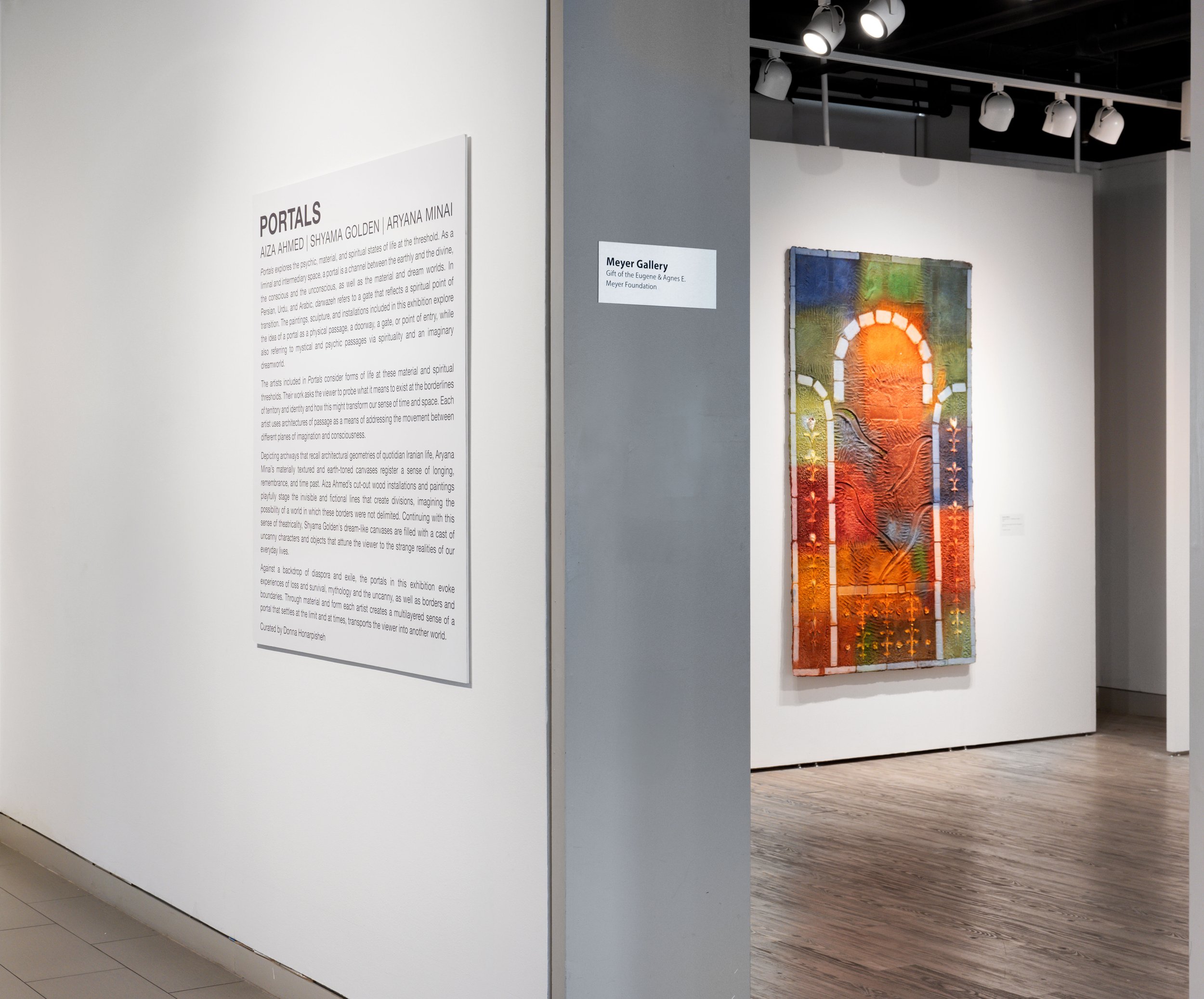
Portals explores the psychic, material, and spiritual states of life at the threshold. As a liminal and intermediary space, a portal is a channel between the earthly and divine, the conscious and the unconscious, as well as the material and dreamworld. In Persian, Urdu, and Arabic, darwazeh refers to a gate that reflects a spiritual point of transition. The paintings, sculpture, and installations included in this exhibition explore the idea of a portal as a physical passage, a doorway, a gate, or point of entry, while also referring to mystical and psychic passages via spiritual experience and the imaginary or dreamworld. Against a backdrop of diaspora and exile, the portals in this exhibition evoke experiences of loss and survival, mythology and the uncanny, as well as borders and boundaries. Through material and form each artist creates a multilayered sense of a portal that transports the viewer into another world. Portals is organized by Donna Honarpisheh, Guest Curator
Essay: The Portal as a Threshold: Aryana Minai, Aiza Ahmed, and Shyama Golden by Donna Honarpisheh
A portal is a liminal and intermediary space; a channel between worlds that suspends the boundaries of time, identity, and geography. Rooted in Persian, Urdu, and Arabic mystical and architectural traditions, the darwazeh (gate) is both a material threshold and a spiritual passage; a channel linking the earthly and divine, the conscious and unconscious, the tangible and the dreamlike. A portal is at once a spatial and architectural structure while also registering a state of mind or a creative capacity. It is an act of disclosure while also attuned to the invisible and what has not yet arrived. A portal belongs to non-linear time, presenting a radical interruption of linear temporality. A portal is a site where past, present, and future collapse into one another, where forgotten histories and alternate possibilities can be summoned into existence.
The exhibition Portals explores the psychic, material, and spiritual states of life at the threshold. A threshold evokes the liminal and the not yet as a space and experience that exists beyond the binary and calls upon us to think, imagine, and linger. The paintings, sculptures, and installations by Aryana Minai, Shyama Golden, and Aiza Ahmed approach the portal as both a physical point of passage—a doorway, gate, or architectural threshold—and a metaphysical or psychic opening into other realities. These portals are architectural and poetic, experiential and otherworldly. They evoke mystical transitions, spiritual encounters, and dream states that resist linear time and fixed identities. Each artist activates what Gaston Bachelard calls “poetic reverie,” an imaginative state wherein the dreamworld becomes a generative space of creative transformation and profound affective experience. Through varied material practices, Minai, Golden, and Ahmed articulate the portal as a site of passage and suspension that opens into unsettled histories, embodied memory, and reimagined futures.
The portal is a gateway between one world and the next, a channel of possibility and transformation. Yet, its movement is non-linear, it carries a spectral quality, which evokes the ghostly, the divine, and the possibilities ruminating in ruin and decay. This tension between the disordered and the destructive comes into play with a sense of rebirth, visions as possibilities, and the aesthetic capacities of imagining otherwise. The works in this exhibition invite viewers to probe the wounds of history and the ghostly remains which continue to permeate the present. Each artist considers the materiality and architectures of passage, inviting contemplation on the uncertainty of what lies on the other side.
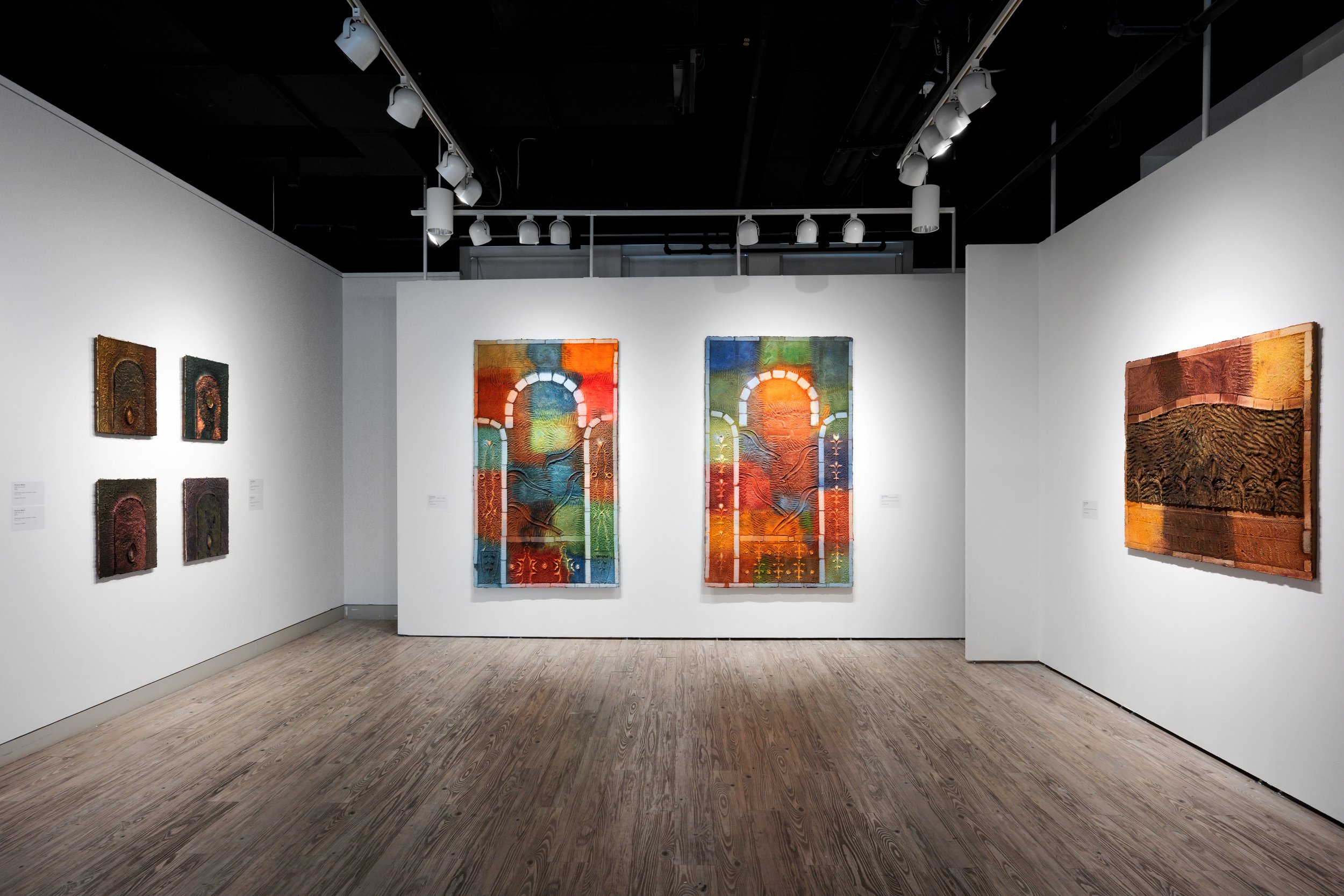
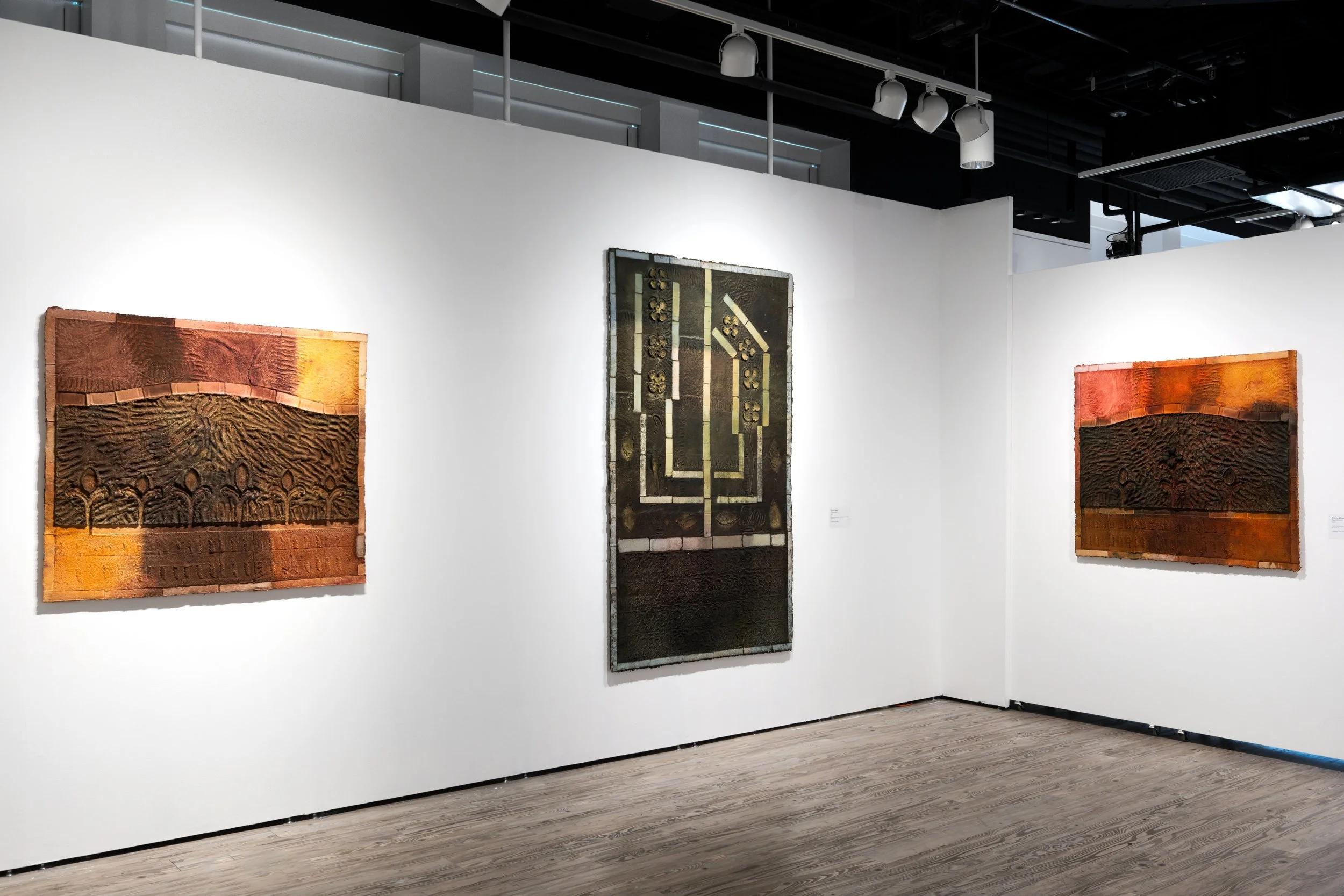
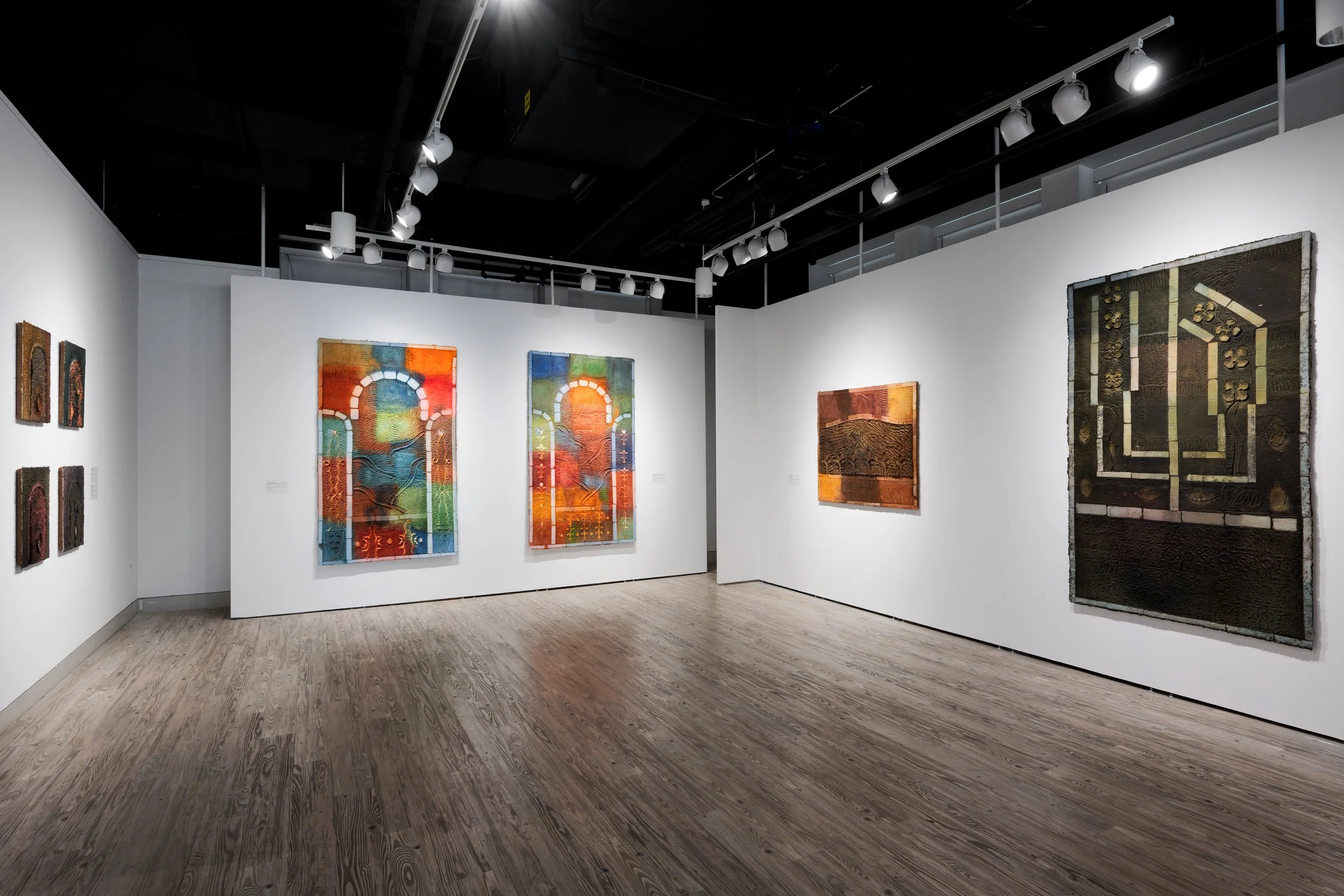
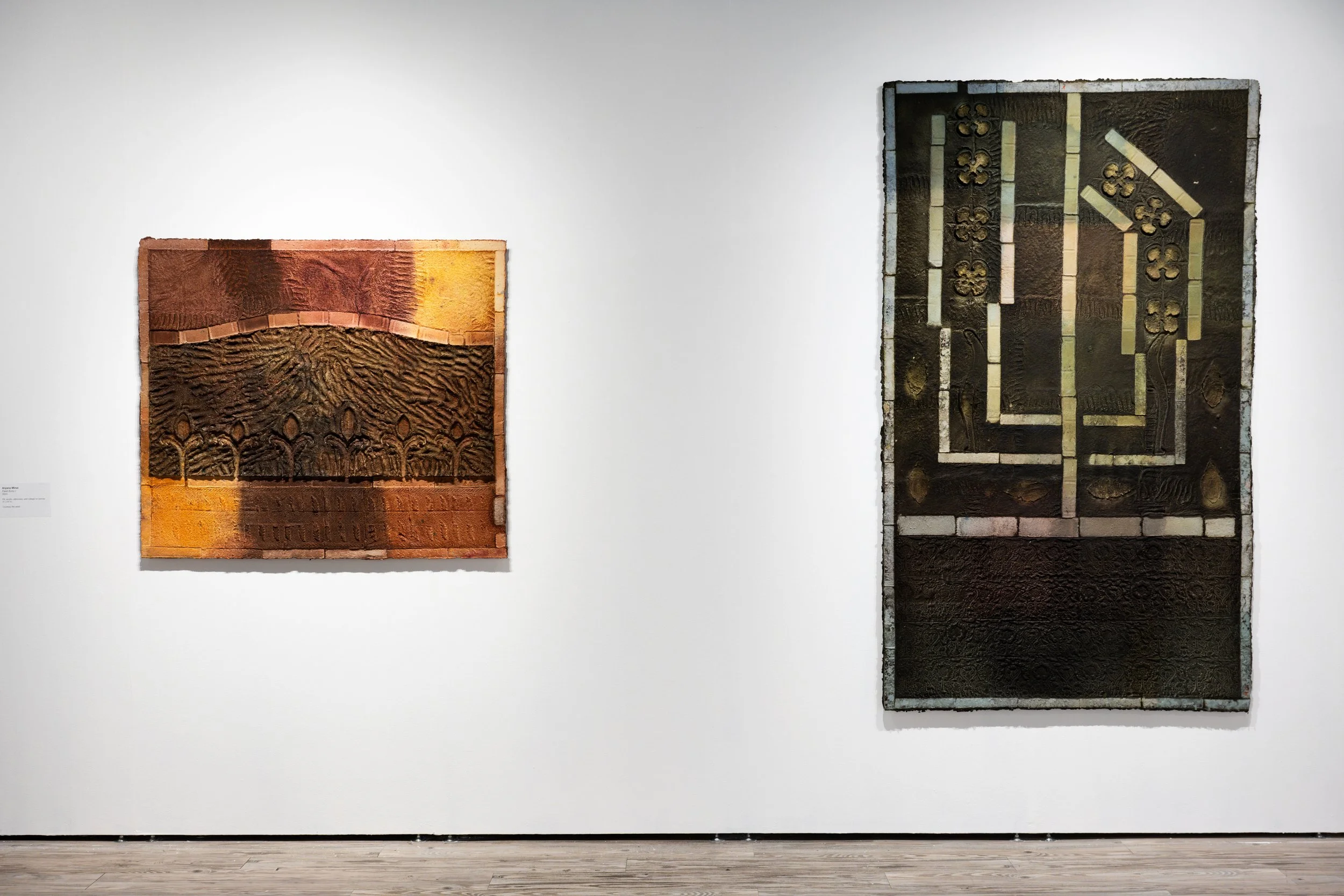
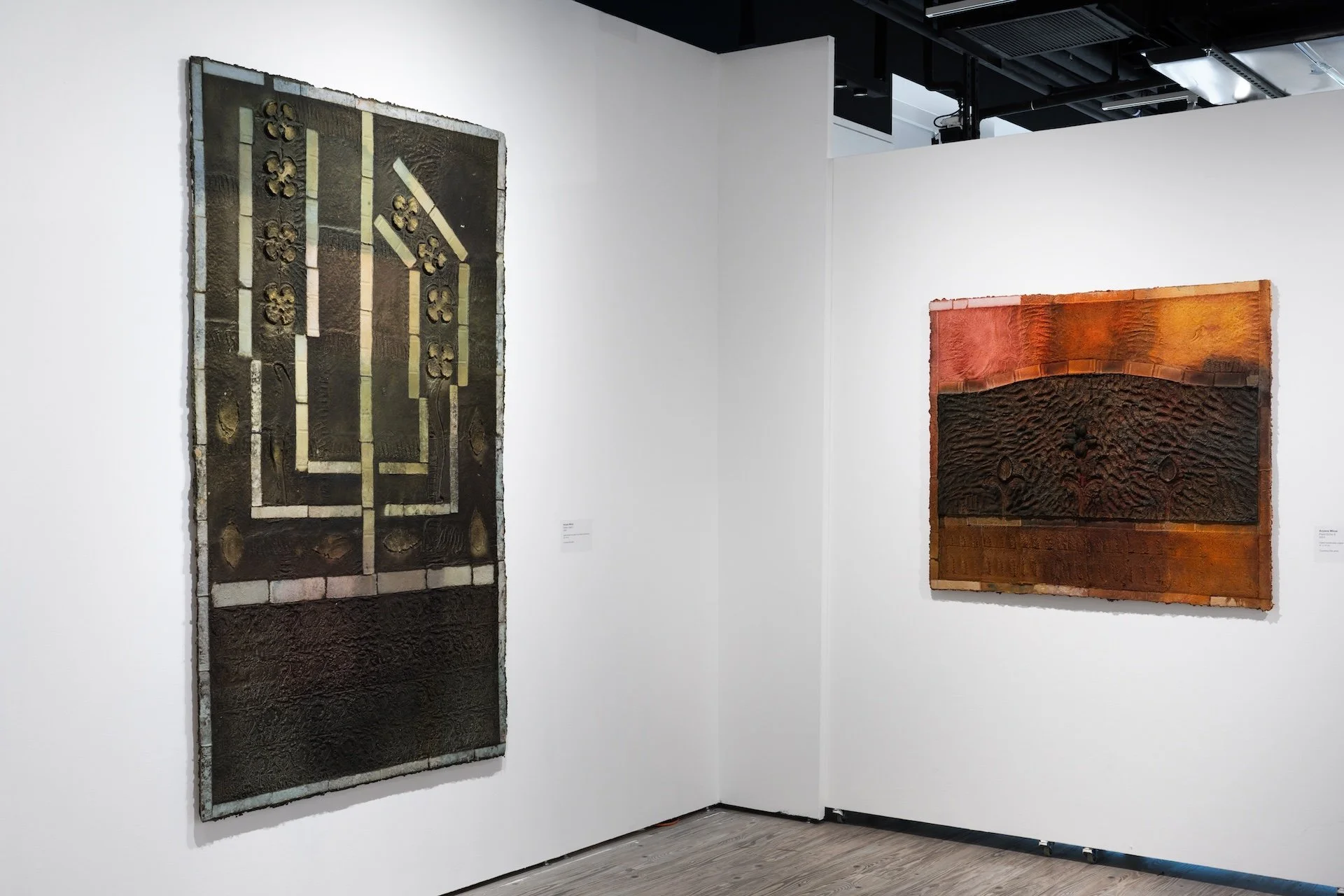
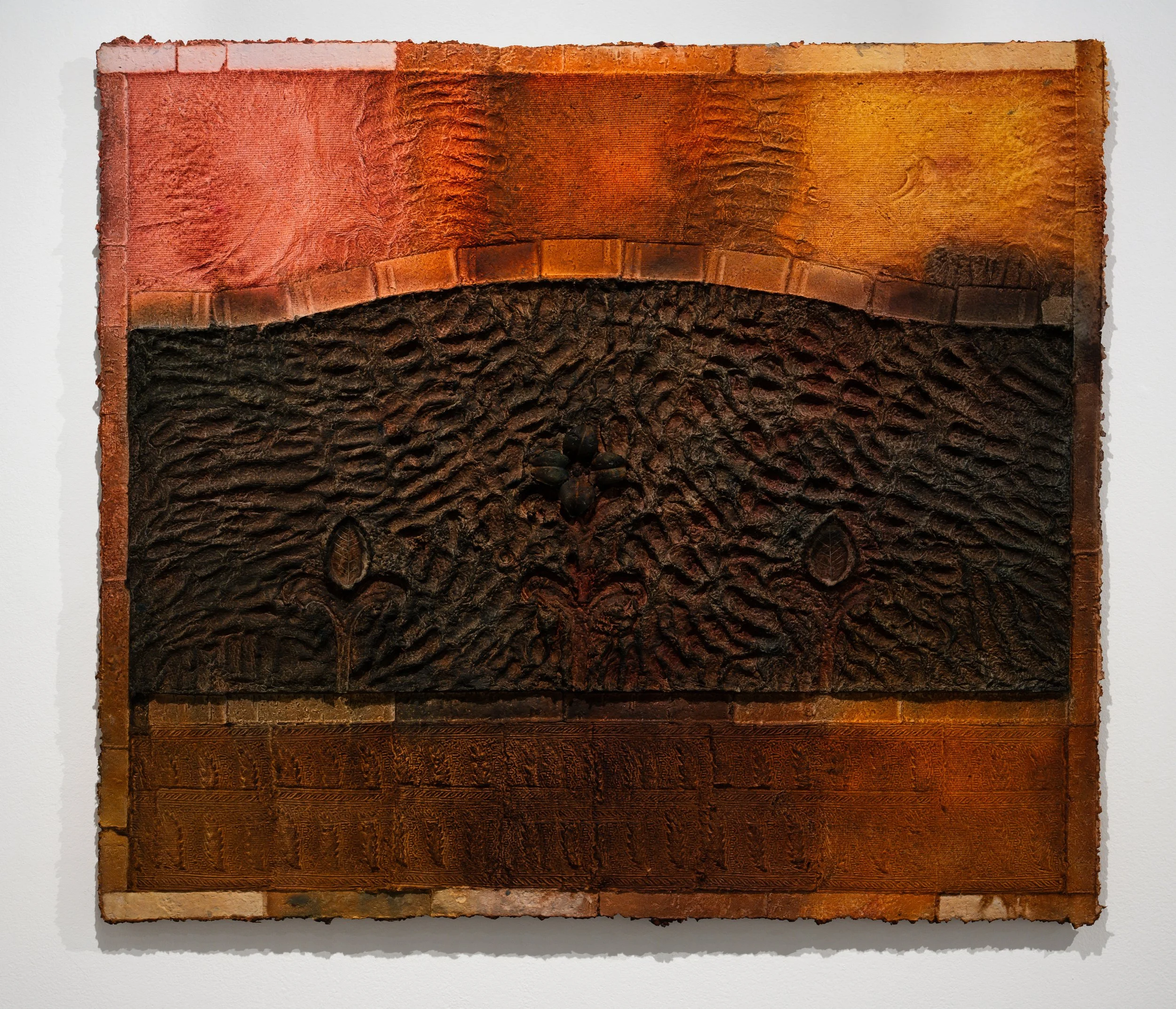
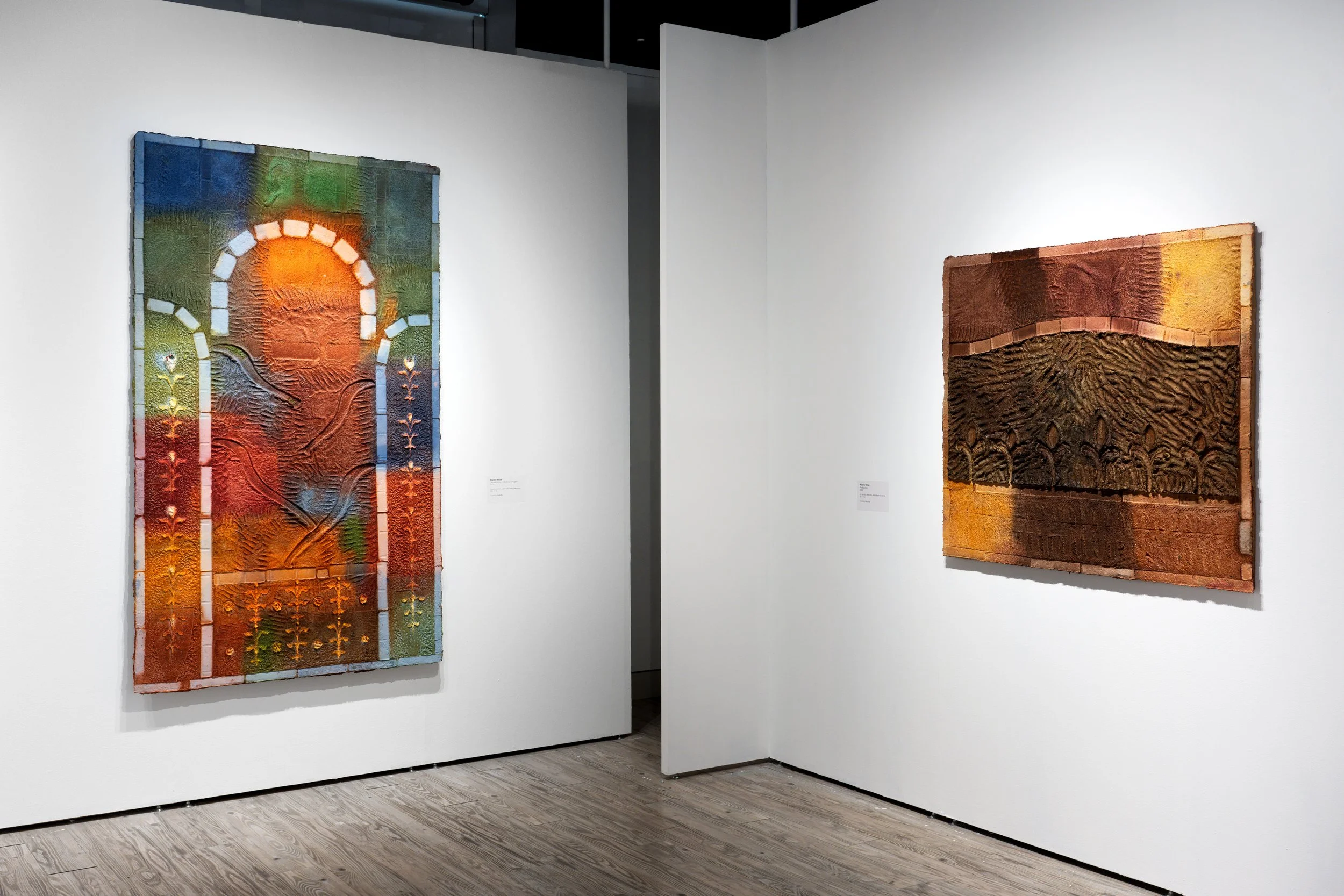
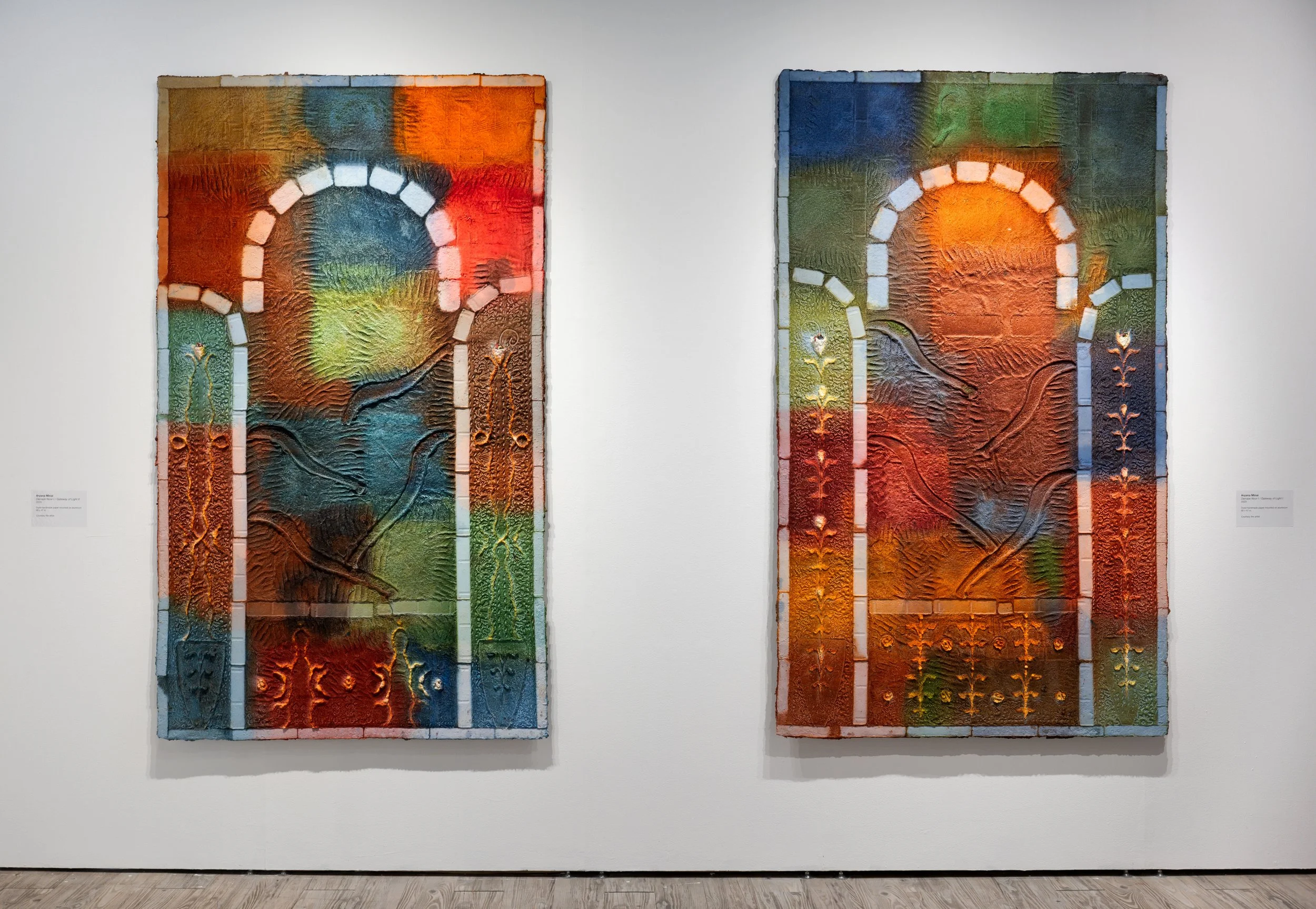
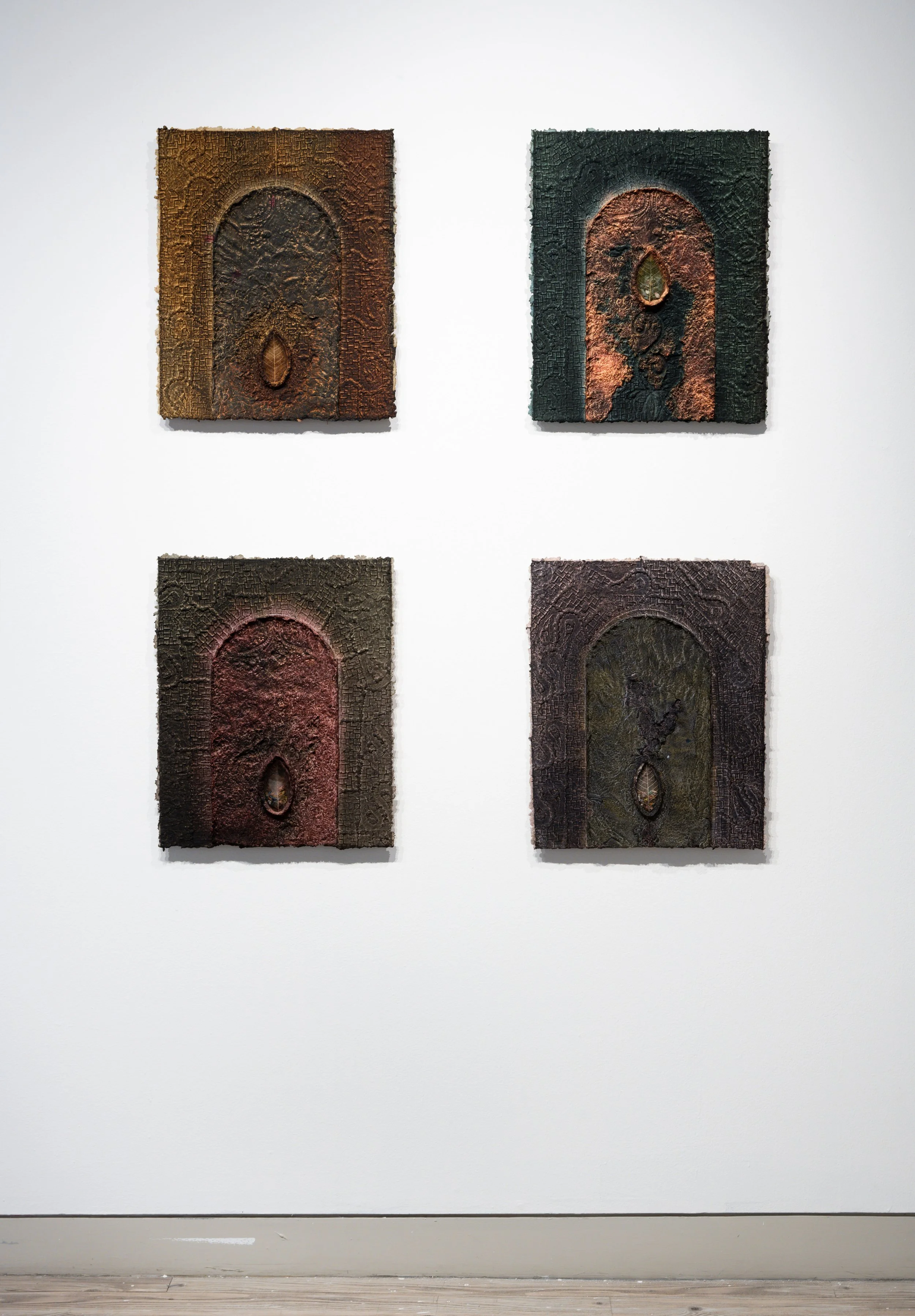
Among the artists in Portals, Aryana Minai’s work draws us most intimately into the architectural and tactile language of the threshold. Memory, materiality, and spiritual passage converge in her delicate paper-based sculptures and wall works. Depicting archways that recall architectural geometries of quotidian Iranian life, Minai’s materially textured and earth-toned works created in paper pulp register a sense of longing, remembrance, and time past.
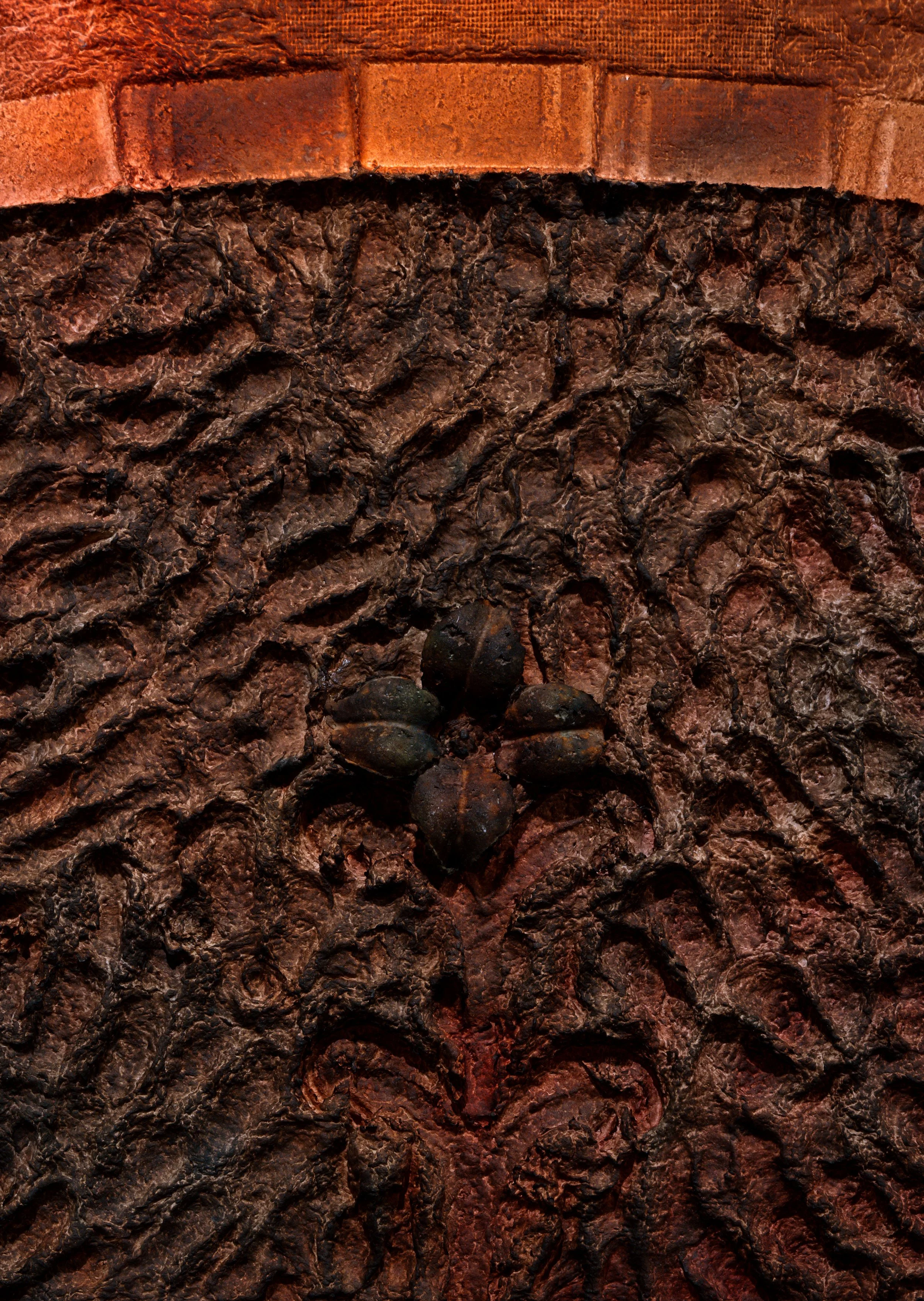
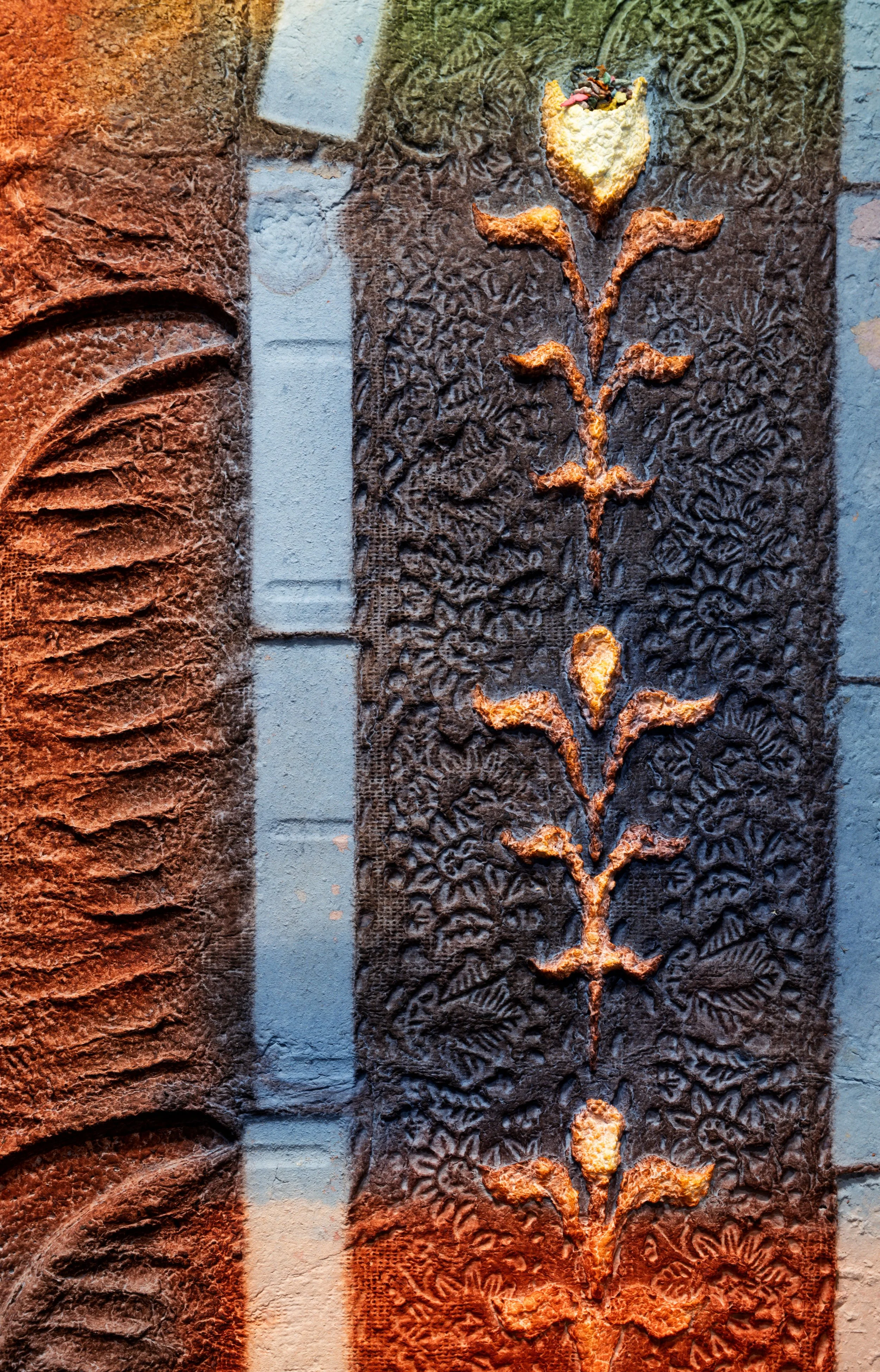
Minai’s choice of paper as a primary material is profoundly significant. Paper is a medium imprinted with the artist’s hand through the process of soaking, tearing, and pressing, a labor-intensive ritual that mirrors the themes of care and endurance. Paper also carries within it layers of history, memory, and narrative, and Minai’s use of earth-tone colors build a simultaneous sense of the ghostly and rebirth within it. Minai works with found and salvaged materials including bricks and stones from demolished buildings, woodblocks once used for textile printing, fragmented remains of vernacular decorative architecture. The archways depicted by individual bricks in works such as Darvaza Noor (Gateway of Light I and II) create a physical sense of the portal while also playing with color and light to emphasize the portal as a space of illumination grounded in the Iranian mystical tradition. Minai animates a dialogue between the corporeal and the architectural, the material and the metaphysical.
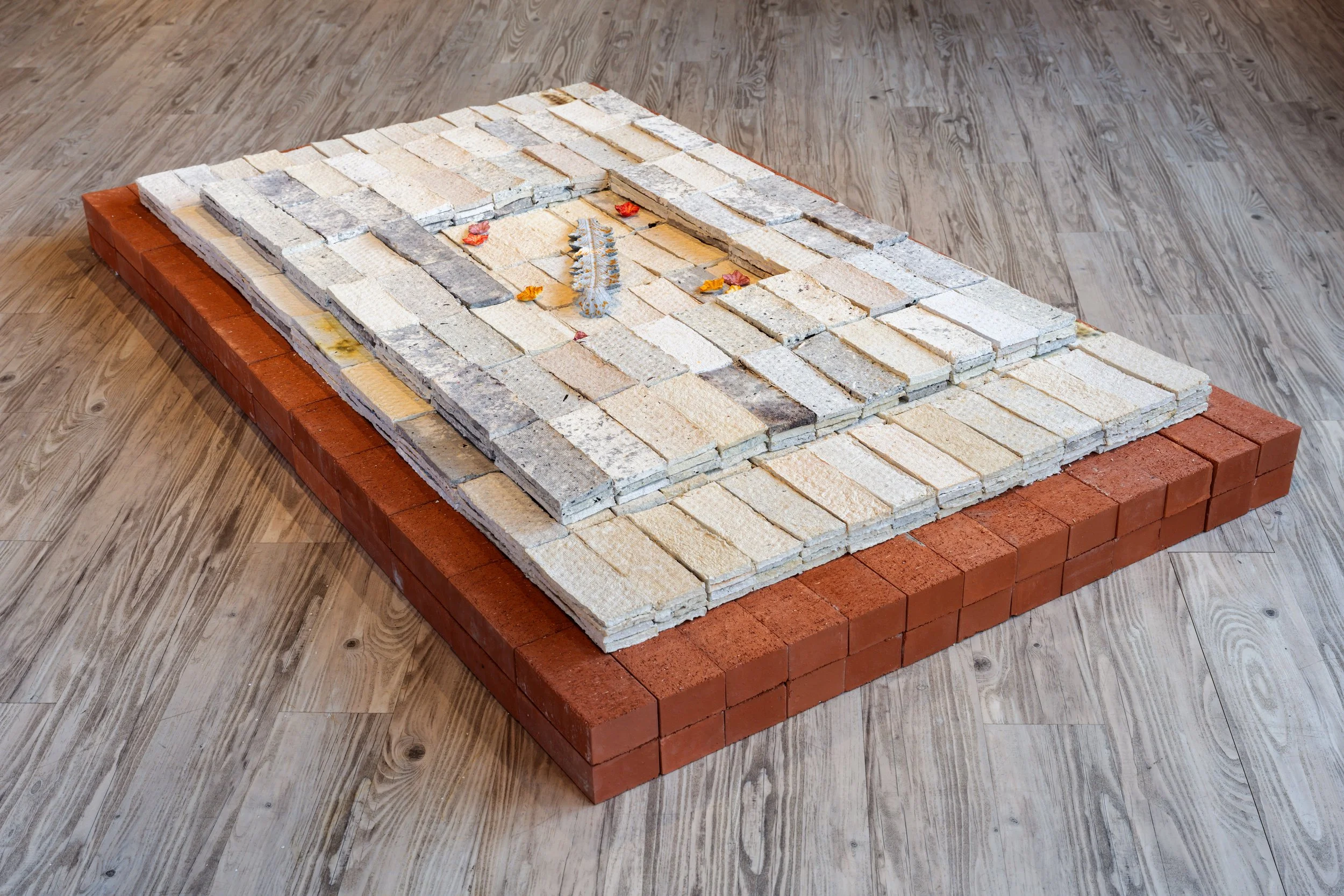
Her works do not depict the body directly but register the intimate relationship between body and space, inviting viewers into a contemplative meditation on their own modes of passage through time and place. These works are invitations to travel, to rest and to dream. The architectural qualities of Minai’s sculptures embody survival instincts: they preserve historic spaces and inhabit fertile terrains of memory and possibility. This is powerfully exemplified in her installation Ruins, the centerpiece of the exhibition (an ongoing site-specific project that the artist reimagines in each iteration). In the work, handmade paper pulp bricks are layered upon clay bricks by hand to evoke decay, fragility, and loss, yet simultaneously gesture toward resilience and the capacity to rebuild and reimagine from what remains.
Minai’s engagement with the geometric traditions of Iranian architecture and the Persian Garden intersects with her lived experience in the diaspora, infusing her work with themes of movement, memory, and relationality. Her portals resist national and colonial borders by transforming structures of control into sites of care and refuge, emphasizing architecture as a living, breathing entity. Her flower-embossed wall sculptures carry seeds gesturing towards the possibility of growth and resistance amid moments of hardship across time. Through color, shape, and material, Minai activates architectural forms as portable, generative spaces that continually shed and acquire memories as bodies pass through them.
Minai’s practice can be understood as a form of remembering that resists state-structured forms of monumentalization by instead salvaging and repurposing materials from lost or endangered sites, Minai’s portals become acts of preservation and transformation that contest forces of destruction. They invite viewers not only to traverse thresholds but to dwell in them, imagining architecture as a living vessel of memory, spirituality, and survival, rather than a static monument.
In contrast to Minai’s architectural meditations, Aiza Ahmed’s work explores the portal as a re-staging of historical events and characters. Ahmed’s portals emerge as temporal and spatial ruptures in which history is approached through the gestural and active aspects of theater. Ahmed’s work creates a world in which national identity and its imposed boundaries are unraveled, revealing the concealed folds of history. Working at the intersection of material history and imagined futures, she engages in what Homi Bhabha calls the “Third Space,” a space of hybridity in which the aesthetic becomes a realm through which to redress historical violence. In this sense, fixed binaries such as self and other, nation and exile, past and present collapse, and cultural meaning are negotiated through disruption and translation.
In her recent installation Staging Wagah (2024), Ahmed uses wood cutouts to restage the symbolic Wagah-Attari border ceremony, a performative ritual of nationalism and rivalry enacted daily since 1959 between India and Pakistan (paused briefly after escalating tensions in 2025). By abstracting and multiplying the image of marching soldiers, with legs raised in divergent, almost unruly directions, Ahmed dismantles the authority of the border as a fixed dividing line and disorients the viewer by creating uncertainty around who belongs on which side of the border. The play with scale and choreography verges on caricature, unsettling the dominance that these figures are intended to symbolize and destabilizing the binary logic of national identity. In doing so, Ahmed transforms the militarized border and its spectacle into a stage that can be re-worked and disrupted.
This sense of theatricality and layered time permeates her broader body of work. In paintings, especially those in muslin, a material with deep roots in the Indian subcontinent and a fraught colonial legacy, Ahmed reclaims the textile as a site of resistance and storytelling. Muslin becomes a portal in itself: once a luxury good extracted through colonial trade networks, it now returns as a medium through which diasporic memory and feminist critique are inscribed. Ahmed’s distortions of masculine figures are rendered in exaggerated scale, caricatured gestures, and destabilizing color palettes, undermining both colonial structures and contemporary patriarchal nationalisms. The figures are at once performative and unraveling, their authority undone by Ahmed’s wit and visual strategy.
Ahmed’s work uses humor as a critical mode of reconfiguring the past, in order to approach the continued psychic effects of nationally-imposed patriarchal structures and historical violence. In this way, Ahmed’s depictions traverse multiple registers of time. The ghostly shadows in her work destabilize existing boundaries. In the work, color spills outside of the line, refusing the line as a demarcating fact, emphasizing the excesses of history and the return of the repressed. By re-animating the performance of the nation-state and building from the theatricality of state performances, Ahmed’s work emphasizes the ways in which national identities are not natural but are highly choreographed and staged. These portals are not a simple escape into an imagined world, rather they demand a reckoning with the constructed nature of borders and the bodies that move across them.
Ahmed’s layered and distorted installation allows us to engage the figure through an alternate perspective and scale, inviting the viewer to consider how the border is not simply a geographic fact but also a psychic wound. For Ahmed, the geographic border, and the continuous line drawn by the artist function as a haunting boundary, which appears both visibly and invisibly across both national and diasporic contexts. Her portals offer no single point of view, instead, they splinter our vision and fragment cohesive narrative, drawing viewers into a zone where contradiction, history, and absurdity coexist.
If Ahmed’s work opens into the staged nature of national history and offers humor and play as an alternative, Shyama Golden’s paintings descend into the deep structures of the unconscious. Her vibrant oil and acrylic compositions create portals as intimate psychic worlds. Golden’s densely populated canvases are filled with uncanny figures, archetypal images and symbols that evoke ritual and mythology. These dreamscapes invite the viewer to a world where myth, memory, dreams, and nightmare collapse.
In Tree Birth (2014), a striking red curtain reveals several openings: a multiplying totem, which gradually morphs into a self-portrait of Golden herself, a tree grown from the water in what appears to be day light at the bottom of the canvas, and an orifice at the top of the canvas which doubles an eye with a moon. What draws the viewer's gaze across the canvas is Golden’s experimentation with light, in which the portal is paralleled with vision, both as a source of spiritual illumination as well as the force of color to shape how and what we see. In Golden’s symbolic figuration, vision traverses both internal and external worlds and acts as a force that shapes both conscious and unconscious realities.
Golden’s practice is deeply rooted in figuration, using the body to explore the layered, often contradictory ways identity is lived and imagined, particularly in diasporic South Asian contexts. Her characters include vine-covered trees suggestive of human archetypes; uncanny self-portraits that multiply the self; and Sri Lankan devil dancers or Yakkas, figures drawn from exorcistic rituals who embody a demonic presence known for disruptive capacities. These figures are therefore not merely static representations, but thresholds that gesture toward the mystical, the unconscious, and the unspeakable.
In several of Golden’s works featured in Portals, a deep blue color scheme dominates the work, emphasizing the relationship between water, memory, and dreams. Water becomes a portal to submerged histories and provides access to another part of oneself. In Close to Home (2024), for example, a nightmarish car accident unfolds alongside a monumental, wounded Yakka. The figure’s exaggerated scale against a surreal backdrop, which feels both familiar and ghostly, creates an unsettling presence. The illustrative aspect of the work does not seek resolution but rather settles into a Freudian dream logic where symbols, traumas, and desires create a distorted scene, where the source of strangeness cannot be located and instead looms across the canvas.
Golden’s work suggests that to pass through the portal is to descend deeper into the psyche, where repressed knowledge and ancient archetypes await reanimation. These paintings do not merely illustrate dreams; they activate them and demand the viewer’s engagement. They invite the viewer to linger in the liminal space between reality and ritual, history and hallucination, sleep and awakening.
Against a backdrop of diaspora and exile, the portals in this exhibition evoke experiences of loss and survival, mythology and the uncanny, as well as other forms of belonging that exceed national or statist understanding of time and memory. Through material and form each artist creates a multilayered sense of a portal that challenges a strict sense of borders and boundaries and at times, transports the viewer into another world. These portals do not promise arrival but insist on passage: the act of lingering, becoming, and opening to the unknown. They are spaces of poetic reverie and critical resistance, where memory, identity, and spirituality coexist in fragile balance. In a world increasingly fractured by walls—state borders, material losses, and epistemic differences—these artists remind us that portals offer alternative pathways. These portals are openings that, while marked by history’s violences, also hold the promise of other worlds.